When you first notice unexpected slowdowns or unusual errors, it may be an early sign that you urgently need RAID server failure recovery. Most of the time, these hints appear quietly and gently, almost like a soft warning that your system is asking for help. Whether you are running a small office server or handling important family data stored on a RAID box at home, these moments can make you feel uneasy. Your mind may start racing with questions. Are my files safe? Will I lose everything? What should I do next?
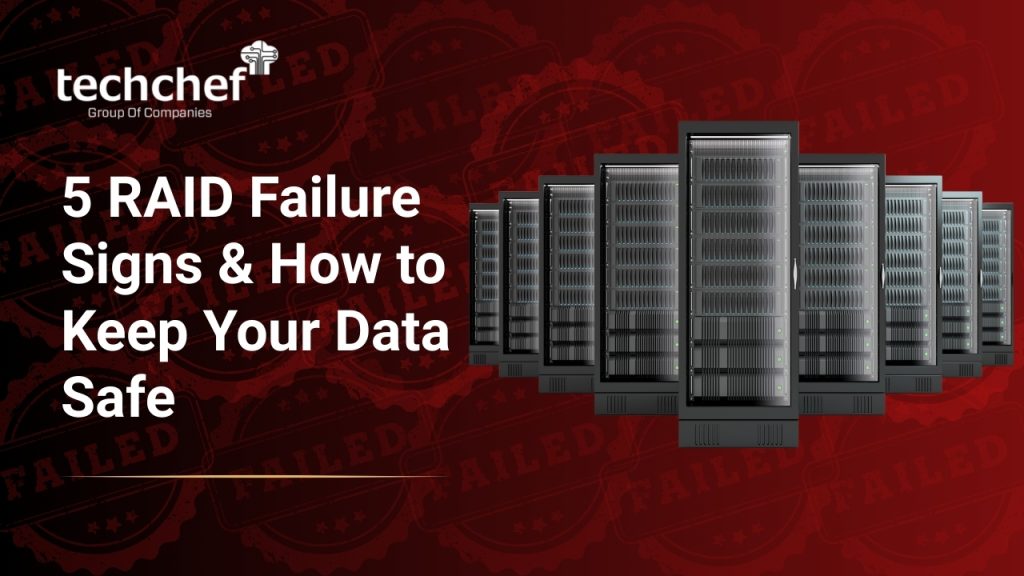
I understand this feeling because over the last 5 years of consulting with businesses, IT teams, and everyday users across India, I have seen the fear that comes when a RAID server starts misbehaving. People worry about memories, documents, financial data, projects, or client files that took years to build. The good news is that you are not alone, and your data is rarely beyond rescue when handled correctly. In this blog, I will walk you through the five major warning signs your RAID server gives before it fails and then guide you step by step on how to protect your important data safely using practical advice and real experience. Together, let us make sure your information stays protected with the right RAID server recovery and secure RAID data protection strategies.
Warning Sign 1 – Sudden Degradation in RAID Performance
Have you noticed your RAID system suddenly reacting slowly? Maybe file transfers that once felt instant now take minutes. Or applications connected to your server seem to struggle. This gradual slowdown is one of the earliest RAID failure symptoms, and it often shows up long before you experience a complete breakdown. Slow read or write speeds usually mean one or more disks are struggling. They may have started developing bad sectors or mechanical friction, which eventually leads to RAID data loss.
This performance drop becomes even more serious when the delay keeps increasing each day. You may feel annoyed or think it is just a temporary glitch, but this behavior is actually the system giving you the first wake-up call. At this stage, proper RAID server failure recovery steps are essential because the performance fall may be affecting parity calculation, data consistency, and disk coordination.
Warning Sign 2 – Frequent Disk Errors or Predictive SMART Alerts
SMART alerts and disk error messages are like red flags telling you that a disk is not healthy. These alerts are generated when the drive itself senses growing problems such as bad sectors, slow response time, or overheating. If your RAID management tool shows SMART warnings repeatedly, it is a sign that the system is trying its best to warn you before a collapse.
These alerts also help identify early RAID corruption because once a disk starts failing internally, it causes read inconsistencies that can corrupt parity or duplicate data on other disks. When your RAID controller starts logging these warnings often, it is time to take action. If you continue operating without fixing the issue, the array may go into degraded mode and eventually fail entirely.
This is the stage where people urgently need RAID server failure recovery because bad sectors, mechanical wear, or firmware instability can quickly lead to unrecoverable data inconsistencies.
Warning Sign 3 – RAID Rebuild Taking Unusually Long
Rebuilding a RAID array should not take an extremely long time. Normally, depending on the disk size and RAID level, a rebuild may take a few hours. But if the rebuild is stuck, taking days, restarting repeatedly, or freezing halfway, it is a strong indication of deeper problems inside your array.
A slow rebuild often means one of the following issues is developing inside your system.
1. Damaged sectors on disks – when the drives inside your RAID array start developing bad or unstable sectors, the rebuild process slows down drastically because the controller keeps retrying every unreadable block again and again.
2. Controller errors – if the RAID controller firmware is outdated, overloaded, or internally failing, it can interrupt the rebuild flow and cause sudden pauses, delays, or incomplete parity calculations.
3. Disk inconsistencies impacting parity – even a small mismatch in parity data or timing differences between disks can force the system to recalculate everything repeatedly, turning a few-hour rebuild into a multi-day struggle.
4. Heat-related failures affecting read operations – when the disks or controller get overheated, read/write speeds drop sharply, causing rebuilds to slow down, freeze temporarily, or completely stop due to thermal throttling.
If you ignore a rebuild process that is stuck or unusually slow, you may face heavy RAID data loss or permanent RAID rebuild issues. This phase is extremely risky because continued rebuild attempts can push the remaining healthy disks into overwork. The safer approach is to stop the rebuild and seek professional guidance. Proper RAID server failure recovery will include careful imaging of each disk before any attempt to rebuild or restore.
Warning Sign 4 – Missing Volumes, Unmounted Partitions, or Data Inaccessibility
If your RAID volume suddenly disappears or your partitions are not showing up anymore, this is one of the most alarming failed RAID array signs. Sometimes the system boots but fails to mount the volume. Other times, your server may show a raw or inaccessible drive. These issues usually indicate logical corruption inside the system, which requires immediate help before the situation worsens.
The problem becomes more serious when you try to access an important file and the system either freezes or says the data cannot be read. This tells you that parity blocks or metadata inside the RAID structure are damaged. In many cases, restoring access to the volume is possible when correct RAID recovery steps are applied. But forcing the system to read or trying to run repair tools on your own may destroy the remaining metadata forever.
At this stage, only controlled and professional RAID server failure recovery can prevent complete data collapse.
Warning Sign 5 – Strange Noises or Overheating in RAID Drives
Hard drives inside a RAID server should ideally operate quietly. If you hear clicking, grinding, buzzing, or metallic tapping sounds, it means the disk is physically damaged. These noises indicate issues like read head misalignment, platter scratches, or motor failure. Many users feel confused at this point because the system may still appear to function, but inside, the drive is struggling to read or write data.
Overheating is another early warning sign linked with physical failure. High temperatures cause mechanical stress on the disk components, making them more prone to crashing. This leads to RAID corruption, RAID data loss, and permanent disk-level problems. Many multi-drive failures begin with heat spikes that go unnoticed until the array stops working completely.
This is the stage where attempting normal use can cause more harm. Stop all activity and consider professional RAID server recovery before the problem becomes irreversible.
Did You Know? Overheating alone is responsible for close to 30 percent of multi-drive RAID failures.
How to Protect Your Critical Data Before Complete RAID Failure
Below are the most important steps you should follow immediately to protect your files and prevent irreversible damage.
1. Create Verified Backups Immediately
Your first priority is to create a backup while the system is still accessible. Focus on critical folders, databases, financial files, project data, or anything that cannot be recreated. Using off-site backups and versioned backups ensures secure RAID data protection.
2. Stop All Writes to the RAID Array
Writing more data to a failing system increases data corruption. New writes may overwrite damaged parity blocks, destroying information that could have been saved earlier.
3. Avoid Rebuild Attempts Without Diagnosis
A rebuild should never be attempted if you are unsure about the disk health. Incorrect rebuild attempts often destroy recoverable data. It is safer to diagnose the array first with the help of experts.
4. Clone Failing Drives Before Work
Before performing any RAID server failure recovery, the first step is to clone each failing disk. This ensures data safety because the recovery process works on the cloned copy and not the damaged drive.
5. Contact Professional RAID Specialists
If your RAID server handles business data or important personal information, professional help is your safest option. Experts know how to recover data safely without worsening existing damage.
Did You Know?
Most RAID failures start with a single weak drive, and more than 60 percent of RAID arrays show early warning signs days or even weeks before complete breakdown but most users ignore them until it is too late.
Professional RAID Server Failure Recovery – When to Seek Experts
Large enterprise workloads and mission-critical data require highly accurate and advanced RAID server recovery. Specialists use controlled methods, advanced tools, and cleanroom facilities to ensure the highest chance of recovering your data safely.
They handle tasks such as:
1. Disk cloning and sector-by-sector imaging — this involves creating a highly accurate bit-level copy of every failing drive so experts can safely rebuild the RAID without putting additional stress on the original disks.
2. Parity analysis — specialists deeply analyze the parity blocks across all disks to identify corruption patterns and reconstruct missing or inconsistent data segments during the RAID recovery process.
3. RAID controller mapping — technicians carefully map out the exact controller configuration, stripe order, block size, and disk sequence to rebuild the original RAID architecture without causing further damage.
4. Logical structure repair — this step focuses on fixing corrupted file systems, damaged directory structures, and broken volume information so that the recovered RAID data becomes fully readable again.
5. Metadata reconstructio — experts recover and rebuild essential metadata like RAID headers, volume details, disk order markers, and configuration signatures to restore access to the full RAID set.
Cleanroom tools are used especially when dealing with physically failing drives because they protect the disk from dust, temperature fluctuations, and static damage.
Conclusion
When your RAID server begins giving subtle or loud signals of distress, it can feel like your entire digital life is at risk. Whether it is your business information, client projects, or personal data, losing access even for a moment creates fear, confusion, and emotional stress. But this situation is not the end. With the right steps, patient handling, and timely help, there is always hope for a successful recovery.
At Techchef, we understand how important your data is to you. With our Mumbai, Delhi, Chennai, and Bengaluru branches, we have helped thousands of people get back their important information safely and confidently. If you feel your system is showing any RAID server failure recovery symptoms or early warnings, this is the right moment to act and not wait.
To learn more or get expert help, visit https://www.techchef.in.
Call us now for a free consultation at 1800-313-1737 and let us assist you in getting your precious data back safely.
FAQs
1. What are the earliest symptoms of RAID server failure?
Slow performance, SMART warnings, rebuild delays, and unusual noises are common early RAID failure symptoms.
2. Can I rebuild a RAID array manually after disk failure?
Manual rebuilds are risky and may worsen corruption. It is safer to get expert assistance.
3. How long does professional RAID server failure recovery take?
It depends on the damage. Logical issues take hours, while mechanical failures may take several days.
4. What mistakes should I avoid when my RAID stops responding?
Avoid rebuild attempts, stop writes, and do not run repair tools without proper diagnosis.
5. Is it possible to recover data after multiple disk failures?
Yes. With proper tools, cloning, and parity reconstruction, recovery is often possible even in multi-disk failure cases.