SAN data loss can strike when you least expect it, and when your business depends on uninterrupted access to data, your SAN system becomes the heartbeat of your entire IT environment. It silently stores, manages, and protects the information that keeps your organisation running. But when something goes wrong in this complex storage network, everything can come to a standstill. The fear of losing years of hard work, client information, financial records, or even internal projects can feel overwhelming. I have seen companies go through this stress many times, and I know how unsettling it can be for anyone managing important data.
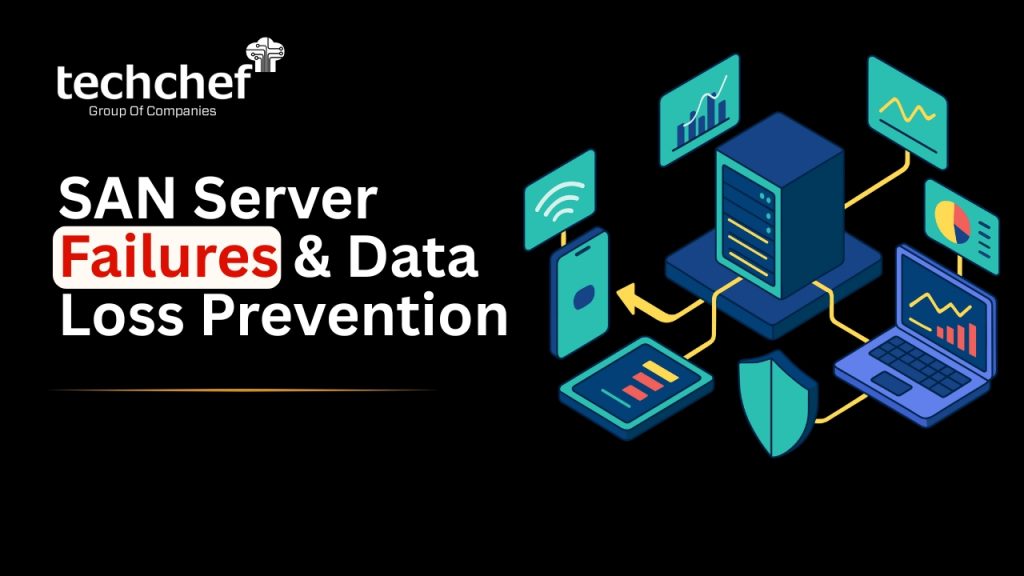
That is why understanding SAN server failures is not just a technical requirement. It is a responsibility we share as people who care about our data and the continuity of our work. When you and I know the common reasons behind SAN data loss, the architecture behind the system, and the signs of an upcoming breakdown, we can prevent major disasters before they happen. And in those moments when things go wrong, support from an experienced team like Techchef becomes not just a service but a lifeline.
Understanding SAN Architecture and Why Failures Occur
If you have ever compared SAN with NAS or local storage, you already know that SAN is built for high performance, reliable data access, and enterprise operations. While NAS behaves like a shared folder accessible over a normal network, SAN operates on a dedicated fibre channel network designed for high speed block storage. It gives your servers faster access to data and greater flexibility in managing workloads.
But this high performance depends on multiple interconnected components working together. A SAN system is made of storage controllers, RAID arrays, switches, host bus adapters, fibre channel cables, and dozens of enterprise storage disks. When even one of these parts experiences issues, the entire storage environment can become unstable. That is why SAN troubleshooting often involves checking every layer, from cabling to firmware. A single failure in any part can trigger major SAN infrastructure issues, eventually resulting in inaccessible data, downtime, or even total disruption.
Most Common SAN Server Failures
1. Storage Controller Failure
A controller acts like the brain of your SAN system. When it malfunctions, your servers cannot access LUNs, causing sudden downtime and data unavailability. This type of SAN storage failure often happens due to overheating, damaged circuitry, outdated firmware, or sudden power drops. Since every I/O operation passes through the controller, even a minor glitch can cause your application or server to stop responding.
2. RAID Failure Inside the SAN
RAID arrays inside a SAN environment store data across multiple disks. When more than one disk fails or when someone performs the wrong rebuild, the entire RAID structure can collapse. I have seen many SAN crashes caused not by hardware but by human error, especially incorrect RAID configurations or forced rebuilds. These mistakes can lead to severe SAN data loss if not handled carefully.
3. Disk Drive Failure
Every enterprise disk, whether HDD or SSD, has a lifespan. As they age, problems like SMART failure, bad sectors, and read-write instability become more common. When drives begin failing inside a SAN, LUNs may start corrupting, leading to inconsistent data access. Since dozens or hundreds of servers may depend on these shared disks, even a single drive failure can become a major incident.
4. Fibre Channel (FC) Cable and Switch Failures
Your SAN system depends on fibre channel cables and switches to maintain high speed, uninterrupted access. But these cables can get bent, damaged, or disconnected. Faulty SFP modules, misconfigured zoning, or an unstable switch can disconnect multiple servers at once. A single FC switch failure can cause large scale application outages, making this one of the most commonly overlooked SAN infrastructure issues.
5. Power Supply Failure in SAN Chassis
If your SAN chassis loses power suddenly, metadata corruption can occur within seconds. Redundant power supplies exist for this reason, but many organisations still rely on single PSU systems. Without redundancy, a simple power failure can break RAID arrays, corrupt controller configurations, and cause complete service downtime.
6. Firmware or Software Corruption
Firmware issues are among the most dangerous types of SAN troubleshooting challenges. Failed firmware upgrades, outdated drivers, or sudden software bugs can bring controllers offline without warning. Improper update procedures can also lead to corrupted partitions, making the SAN unresponsive.
7. Human Error and Misconfiguration
This is one of the most common causes of SAN server failures. Incorrect LUN masking, wrong zoning, accidental deletions, or improperly configured RAID arrays can cause system crashes. In many consulting projects, I have seen SAN failures caused not by hardware but by rushed configuration changes.
Did You Know?
Most SAN failures occur due to human errors, not hardware malfunction.
Warning Signs That Your SAN Server Is About to Fail
Before major SAN storage failure events, the system usually shows early signs. You may see slow read or write operations, sudden increases in disk error count, or frequent RAID rebuilds. Hosts might start disconnecting randomly, making your team think it is a network issue when it is actually a SAN-level problem. Unstable controller behaviour is another early warning that your storage is facing internal trouble.
Did You Know?
A SAN server may show slow performance weeks before a major failure, but admins often overlook it.
How to Prevent SAN Server Failures and Protect Data
1. Implement Redundant Controllers and Paths
To protect yourself from SAN server failures, always use active-active controllers and multi-path I/O. This ensures that even if one component fails, your systems continue running smoothly.
2. Regular Firmware and Driver Updates
Using vendor approved firmware updates reduces the risk of software related SAN infrastructure issues. Skipping updates or applying unsupported patches can create unexpected instability.
3. Continuous Monitoring and Logging
SAN monitoring tools help you track disk health, controller status, and fibre channel performance. Automated log alerts can warn you of early problems before they escalate.
4. Follow Proper RAID Best Practices
Avoid keeping arrays in degraded mode for long. Always use enterprise grade disks and ensure correct rebuild procedures to prevent unnecessary SAN data loss.
5. Scheduled Backup Strategy
Keep your backups on a separate network or system. A combination of snapshots and offsite backups ensures that even if your SAN fails, your data remains accessible.
6. Maintain Clean Fibre Channel and Network Infrastructure
Replace aging SFP modules, validate zoning, and keep cabling organised. Clean infrastructure reduces downtime and prevents hidden SAN troubleshooting challenges.
Did You Know?
More than 60 percent of SAN outages could be prevented with regular monitoring and firmware updates.
Best Practices for Reducing SAN Data Loss Risk
Use a proper disaster recovery plan to protect your business. Enable real time replication to maintain an additional copy of your data. Perform quarterly SAN health audits to identify hidden issues in your storage network. Always document your configurations to reduce admin mistakes and avoid unnecessary SAN server failures.
Did You Know?
Many companies never check their SAN’s internal logs, which could warn them about failures weeks in advance.
What to Do When Your SAN Server Fails
If your SAN system stops responding, avoid restarting it repeatedly. This may worsen the existing corruption. Do not attempt RAID rebuilds on your own. Disconnect any affected drives to prevent overwriting. At this stage, only a professional SAN data recovery team can help you retrieve your files safely. DIY recovery attempts often cause permanent damage because SAN systems are much more complex than standard server setups.
Techchef specialises in SAN, NAS, and RAID recovery with advanced technology, certified cleanrooms, and experienced engineers who have recovered thousands of enterprise level datasets. When your business is at risk, expert help becomes essential.
Conclusion
When SAN server failures strike, they disrupt everything you have worked hard to build. These failures can occur in controllers, RAID arrays, fibre channel networks, or even power systems. But with proper monitoring, good practices, and strong preventive measures, you can protect your organisation’s data from unnecessary harm. You do not have to feel alone when your business systems start showing signs of trouble. With the right guidance, you can safeguard your data and your peace of mind.
If your SAN system has already failed or your important files have become inaccessible, do not take risks. Turn to a trusted expert who understands both technology and the pressure you are experiencing. Techchef has helped countless businesses recover from critical storage failures with care and professionalism. Visit https://www.techchef.in/ for safe and reliable SAN data recovery services.
Call us now for a free consultation at 1800-313-1737 and let us assist you in getting your precious data back safely.
FAQs
1. What causes most SAN server failures?
Most failures come from controller malfunction, RAID corruption, fibre channel issues, power faults, or human misconfigurations.
2. Can a failed SAN RAID be rebuilt manually?
It depends on the exact problem. Wrong rebuilds can cause permanent damage, so professional help is recommended.
3. How can I prevent data loss in a SAN environment?
Use redundancy, update firmware regularly, monitor system health, perform scheduled backups, and avoid incorrect LUN or RAID changes.
4. What should I do first when my SAN server stops responding?
Do not reboot repeatedly. Stop all writes, keep the system powered on, and contact a professional recovery team.
5. Does Techchef provide SAN data recovery?
Yes, Techchef offers SAN, NAS, and RAID data recovery using advanced cleanroom technology and experienced engineers.