In May 2025, a well-known education institute in Hyderabad decided to modernise its IT infrastructure. They replaced hundreds of old desktop computers, printers, and hard drives with newer models. The unused devices were shifted to a storeroom and forgotten for months. When the institute finally arranged to clear the space, they faced two urgent issues. Many of the drives still contained student and staff records, and several devices had begun leaking battery fluids, creating a risk to both health and the environment.
This situation is common in many organisations and even in homes across India. Outdated electronics often sit unused, gathering dust and slowly degrading. Few people realise that such devices can release harmful substances like lead and mercury into the soil and water if not handled properly. Even more worrying is the sensitive personal and business data that remains on these devices. India generates over 3.2 million tonnes of e-waste each year, much of it still processed in unregulated ways that threaten both our environment and our privacy.
What is E-Waste, and Why Does It Matter
E-waste refers to discarded electronic and electrical devices such as mobile phones, laptops, desktop computers, printers, batteries, and chargers. As technology advances quickly, many devices become obsolete within a few years, adding to the growing pile of waste.
Improper disposal is dangerous. Harmful materials like lead, cadmium, and mercury can seep into soil and contaminate water, while burning wires and plastics in informal scrapyards releases toxic fumes, harming nearby communities. These devices also often contain personal or business data that can be retrieved and misused if not securely destroyed.
By choosing a certified e-waste recycler or a trusted e-waste management company such as Techchef E-waste Solutions, we can protect our environment and keep sensitive data safe through secure destruction methods.
Did You Know?
India is the third-largest generator of e-waste in the world, but only about 22% is processed by authorized facilities, leaving the rest to informal sectors that threaten both our environment and data security.
Understanding What is E-Waste Recycling
Responsible e-waste recycling is not just about throwing old devices into a bin. It is a carefully structured process that ensures electronics are handled safely, valuable materials are recovered, and hazardous substances do not harm the environment. The process typically includes the following steps:
✅ Collection of devices from homes and offices
Certified recyclers arrange secure pickup of old electronics from residences, businesses, and institutions. This ensures that devices are transported safely and tracked from the very beginning.
✅ Segregation of reusable and non-reusable components
Devices are carefully sorted. Functional parts like circuit boards, memory modules, and metal frames are separated from non-recyclable plastics and damaged components. This makes the recycling process more efficient and reduces waste.
✅ Safe dismantling under controlled conditions
Trained technicians dismantle each device following strict safety protocols. Hazardous components such as batteries and capacitors are removed first to prevent leaks, chemical exposure, or fires.
✅ Data sanitisation, wiping, degaussing, or erasure
One of the most critical steps is data handling. Hard drives, SSDs, and other storage devices undergo professional data destruction methods to ensure sensitive information is permanently removed. This protects businesses, organisations, and individuals from data breaches.
✅ Recovery of metals like copper, gold, and silver
Valuable metals embedded in electronics are extracted and recycled for reuse in manufacturing new devices. This reduces the need for mining, conserves natural resources, and supports a circular economy.
✅ Eco-friendly disposal of non-recyclable residue
Materials that cannot be reused or recovered are disposed of according to environmental regulations. Certified recyclers prevent toxic substances from entering landfills, soil, or water bodies.
A certified e-waste management company like Techchef E-waste solutions follows strict guidelines at every step to ensure that devices do not end up in landfills or illegal recycling markets. By choosing a professional recycler, you are not only reducing pollution and conserving resources but also contributing to a safer and healthier environment for future generations.
Growing E-Waste Problem in India
India is one of the largest generators of e-waste globally. With rapid digital adoption and shorter gadget lifecycles, the volume continues to grow every year.
In many cities, informal recycling methods such as open burning and acid baths are still used to extract metals, releasing harmful fumes and chemicals. Rivers near unregulated scrapyards show signs of contamination, affecting aquatic life and local communities. Businesses face additional challenges. Outdated servers, storage devices, and networking equipment often remain unused but cannot be simply discarded because of the sensitive data they hold.
Did You Know?
India generates over 3.2 million tonnes of e-waste every year, yet less than 25% is processed through authorised recyclers, leaving the majority to informal sectors that pose serious risks to both the environment and data security.
Step-by-Step Guide to Choosing the Right E-Waste Recycler
Choosing the right e-waste recycler or solutions provider can feel overwhelming, especially if you are responsible for sensitive data or large volumes of electronics. Here is a step-by-step guide to help you make the right decision and ensure both environmental safety and data security.
1. Verify Certifications and Legal Compliance
Before handing over your old devices, always check that the recycler is fully authorised. A reliable provider will have approvals from the Central Pollution Control Board (CPCB) as well as the respective State Pollution Control Boards. These certifications ensure the company follows strict environmental and safety standards. Avoid informal collectors who operate without proper documentation, as they may expose you to legal and environmental risks.
2. Review Services Offered
Not all e-waste recyclers provide the same services. Look for a provider that offers a full spectrum of solutions, including:
✅ E-waste Recycling: Safe dismantling and reuse of components
✅ Data Sanitisation: Cleaning devices to remove residual data
✅ Data Wiping: Permanent deletion of files
✅ Data Degaussing: Magnetic destruction of sensitive data
✅ Data Erasure: Certified and verifiable removal of confidential information
A comprehensive service ensures that your electronics are not only recycled responsibly but also that your data is completely secure.
3. Evaluate Transparency and Process
A trustworthy recycler is transparent about their entire process. Ask for details on how devices are collected, dismantled, and processed. Check whether they provide tracking or documentation for every step. This transparency builds trust and ensures you know exactly what happens to your e-waste.
4. Assess Data Security Measures
Data security should be a top priority, especially for businesses. Confirm whether the recycler offers certified data destruction methods and provides proof of completion. Techniques like data wiping, degaussing, and physical destruction of hard drives are crucial for protecting sensitive information from unauthorised access.
5. Check Customer Support and Pickup Services
Good e-waste providers make the process convenient. They should offer:
✅ Easy scheduling for collection from your home or office
✅ Responsive customer support to answer queries
✅ Documentation or certificates confirming safe disposal and data destruction
Authentic support ensures a smooth, hassle-free experience and peace of mind that your e-waste is handled professionally.
Did You Know?
Many organizations in India mistakenly hand over electronics to informal collectors because of convenience. Studies show that over 70% of e-waste from households and small businesses never reaches certified recyclers, putting both the environment and sensitive data at risk.
How Techchef E-Waste Solutions Stands Out
Techchef E-waste solutions has earned trust as a responsible partner in e-waste management. Their mission is clear: making India cleaner and greener.
Led by experienced professionals like Mr. Rakesh Kumar, Mr. Anish Kumar, and Mr. Chandan Chaudhary, the company focuses on both environmental safety and data security. They offer services such as e-waste recycling, data sanitisation, data wiping, data degaussing, and data erasure, ensuring complete compliance and transparency.
A Bengaluru-based healthcare provider once partnered with Techchef to dispose of outdated servers. The provider appreciated not only the secure destruction of sensitive patient records but also the certification they received as proof of safe disposal.
Environmental Benefits of Choosing Certified E-Waste Services
Choosing a certified e-waste recycler like Techchef E-waste solutions not only helps protect sensitive data but also has significant environmental benefits. Here’s why working with professional recyclers matters:
✅ Reduces Landfill Waste
Certified recyclers ensure that electronics are dismantled and processed properly. Instead of ending up in open dumps or landfills, harmful materials are segregated and safely managed, reducing soil and groundwater contamination.
✅ Limits Air and Water Pollution
Informal recycling methods often involve burning wires or using acids to extract metals, releasing toxic fumes and chemicals. Professional recyclers use controlled methods that prevent hazardous emissions, protecting communities and ecosystems.
✅ Recovers Valuable Metals for Reuse
Electronics contain precious metals like gold, silver, copper, and palladium. Certified recycling recovers these metals, which can be reused in manufacturing new devices. This reduces the need for mining, conserving natural resources and reducing energy consumption.
✅ Supports a Circular Economy
By recycling and reusing components, certified e-waste providers contribute to a sustainable, circular economy. Materials are kept in use for longer, reducing waste, conserving resources, and minimizing the environmental footprint of new electronics.
✅ Protects Health and Wildlife
Safe recycling prevents toxic substances from entering the soil, water, and air. This protects local communities, children, and wildlife from exposure to harmful chemicals, creating a healthier environment for future generations.
✅ Promotes Compliance and Accountability
Certified recyclers follow government regulations and provide documentation of proper disposal. This ensures businesses and individuals meet legal obligations while promoting environmental responsibility.
Did You Know?
According to recent reports, less than 25% of India’s e-waste is processed through authorised channels. The rest is often handled informally, leading to severe soil, water, and air pollution. Choosing certified recycling not only safeguards the environment but also prevents irreversible damage to ecosystems and human health.
Common Myths About E-Waste Recycling
Many people are unsure about what to do with old electronics. Unfortunately, several myths continue to prevent safe disposal. Here are the most common ones:
Myth 1: Throwing electronics in the trash is harmless
Fact: Discarding devices with regular waste may seem convenient, but it is dangerous. Electronics contain harmful substances such as lead, mercury, and cadmium, which can leach into soil and groundwater. Over time, these toxins affect not just the environment but also the health of communities, including children and the elderly.
Myth 2: Deleting files is enough for data security
Fact: Simply deleting files or formatting your hard drive does not permanently remove data. Skilled individuals can recover deleted information using widely available tools. Professional recyclers provide services like data wiping, degaussing, and certified erasure, ensuring your personal and business information is fully protected.
Myth 3: Recycling is unnecessary for old devices
Fact: Old electronics may seem useless, but they contain valuable metals like copper, gold, and silver. Certified recycling recovers these materials, reduces the need for mining, and prevents environmental pollution. Choosing proper recycling also supports a circular economy and promotes sustainability.
Tip: Do not fall for these myths. Always choose a certified e-waste recycler or solutions provider like Techchef E-waste solutions. Doing so ensures safety, compliance, and environmentally responsible handling of your old electronics.
DIY Tips Before You Hand Over E-Waste
Before handing over your electronics to a recycler, taking a few preparatory steps can make the process safer and more efficient:
✅ Back up all important files
Save documents, photos, and other important data to an external drive or cloud storage before recycling devices. This prevents accidental loss of crucial information.
✅ Remove SIM cards, memory cards, and accessories
Always take out SIM cards, microSD cards, external batteries, and other detachable components. These items may contain personal data or may be reusable.
✅ Create a detailed list of items for recycling
Document each device, including make, model, and condition. This helps the recycler track the items, provide accurate certificates, and manage the recycling process efficiently.
✅ Separate devices by type
Sort devices into categories like laptops, desktops, mobile phones, printers, and batteries. This makes dismantling and recycling easier and faster for the service provider.
✅ Clean devices lightly
Wipe surfaces to remove dust or debris, making handling safer for recyclers. Avoid using harsh chemicals.
Taking these small but important steps ensures smoother recycling, protects your data, and allows the recycler to operate safely and efficiently.
Did You Know?
Many devices collected without preparation delay the recycling process. Proper sorting, data backup, and removal of sensitive components can reduce processing time and ensure your electronics are handled responsibly.
Conclusion
Handling e-waste responsibly is no longer an option but a necessity. Whether you are a business owner worried about sensitive data or a home user concerned about the environment, choosing a certified and experienced provider makes all the difference.
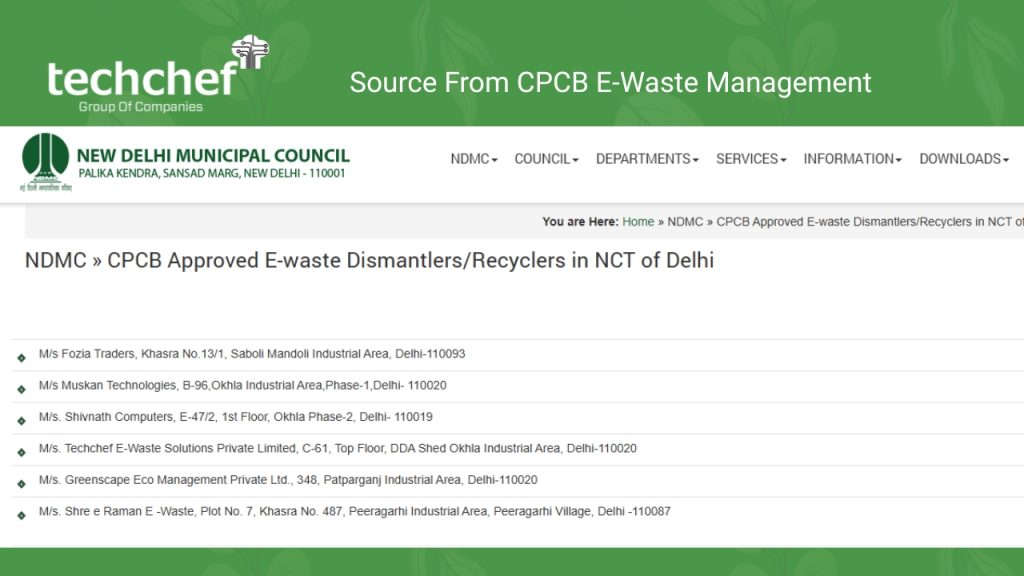
Techchef E-waste solutions which is authorised by the Central Pollution Control Board and proudly listed on its official website as Top 5 Ewaste Managment Company in Delhi, India. You Contact Techchef Ewaste solution to gain peace of mind knowing your data is safe and your devices are recycled in an eco-friendly manner. Contact us today at 1800-313-1737 or visit www.techchef.in to schedule your e-waste collection and be part of a cleaner, safer future.
FAQs
Q1: What certifications should a reliable e-waste recycler have?
A: They should be authorised by the CPCB and follow government-approved recycling processes.
Q2: How is my data securely destroyed?
A: Through professional services like wiping, degaussing, and certified erasure.
Q3: Can Techchef e-waste handle corporate and household e-waste?
A: Yes, they serve both corporate and residential customers with tailored services.
Q4: Will I get proof of recycling and data destruction?
A: Yes, certified providers like Techchef E-waste solutions provide detailed certificates.
Q5: Why is eco-friendly recycling so important?
A: It protects the environment, recovers valuable resources, and reduces pollution.