
Hi, I am Divya Jain , and I work with Techchef as a Technical Content Writer. For the past four years, I have been writing about cybersecurity, data protection, and digital technologies.
During my research and writing work, I regularly come across reports about cyber incidents, data breaches, and security failures that affect both businesses and customers. Many of these incidents happen simply because organizations do not test their systems properly.
Because of this, I thought of writing about an important topic — why Vulnerability Assessment and Penetration Testing (VAPT) should become a regular and essential security practice for Indian e-commerce businesses, especially after the introduction of the Digital Personal Data Protection Act, 2023.
In this article, I have tried to explain things in simple and practical language, so even business owners who are not technical experts can understand why cybersecurity testing is important.
The Reality of Today’s Online Business World
Online shopping has become a normal part of everyday life in India. People now purchase clothes, electronics, groceries, and many other products through e-commerce websites.
To complete these transactions, customers usually share personal information such as:
- ● Name
- ● Phone number
- ● Email address
- ● Delivery address
- ● Login credentials
- ● Payment information
Customers share this data because they trust the platform they are using.
However, the reality is that this data is extremely valuable, and that is exactly why cybercriminals constantly try to steal it.
In many cases, hackers do not even need very advanced techniques. Sometimes they exploit simple security gaps that companies never tested or noticed.
This is where Vulnerability Assessment and Penetration Testing becomes very important.
What is VAPT?
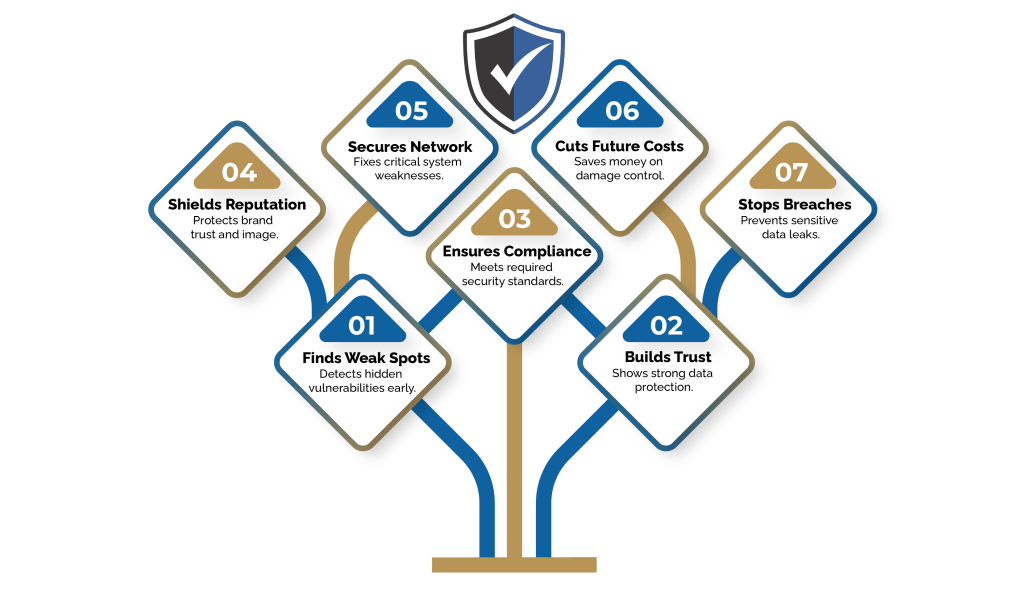
Top VAPT Advantages to Protect Your Digital Assets
VAPT stands for Vulnerability Assessment and Penetration Testing. It is a cybersecurity testing process that helps organizations identify security weaknesses before attackers discover them.
The process mainly includes two parts.
Vulnerability Assessment
In this stage, security tools and experts scan websites, applications, servers, and networks to detect potential security issues such as:
- ● Outdated software
- ● Weak passwords
- ● Missing security updates
- ● Incorrect configurations
These weaknesses may look small but can create serious security risks.
Penetration Testing
Penetration testing goes one step further. In this stage, cybersecurity professionals simulate real cyberattacks in a controlled environment.
These professionals are often called ethical hackers because they use hacking techniques to help organizations improve security rather than cause damage.
The goal is to understand how an attacker could break into the system and what data could be exposed.
Why E-commerce Businesses Are Targeted by Hackers
E-commerce platforms store a large amount of valuable information. This includes:
- ● Customer personal data
- ● Login credentials
- ● Order history
- ● Payment transactions
- ● Delivery information
Because of this, online shopping platforms are often attractive targets for cybercriminals.
Even a small vulnerability in a website can allow attackers to access thousands or even millions of customer records.
Another common misconception is that hackers only target large companies. In reality, smaller businesses are often easier targets because they may not have strong cybersecurity systems in place.
The Role of the DPDP Act in Data Protection
To protect personal data of individuals in India, the government introduced the Digital Personal Data Protection Act, 2023.
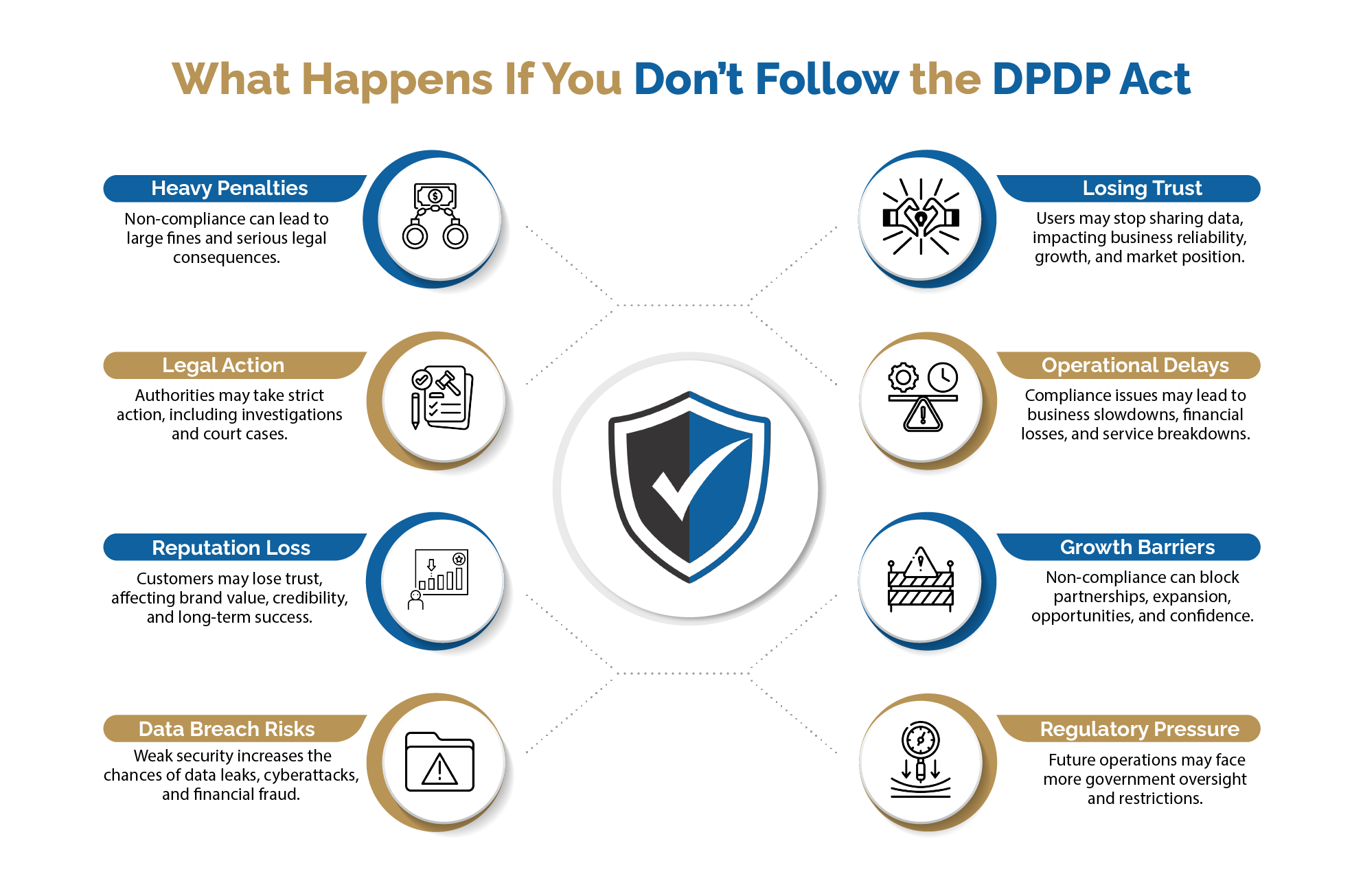
What Happens If You Don’t Follow the DPDP Act
This law requires organizations that collect personal data to:
- ● Handle data responsibly
- ● Protect it from unauthorized access
- ● Prevent data breaches
- ● Maintain reasonable security safeguards
If businesses fail to protect customer data, they may face:
- ● Legal consequences
- ● Financial penalties
- ● Loss of customer trust
- ● Damage to brand reputation
However, implementing security policies alone is not enough. Companies also need technical security measures, and this is where VAPT becomes useful.
Why VAPT Should Be Mandatory for E-commerce Businesses
Based on my experience researching cybersecurity topics, I believe VAPT should become a regular and mandatory practice for e-commerce companies.
Here are some important reasons.
1️⃣ Protecting Customer Data
Customers trust businesses with sensitive information. If this information is leaked, it can lead to fraud, identity theft, and financial losses.
VAPT helps identify vulnerabilities before attackers exploit them.
2️⃣ Detecting Hidden Security Gaps
Many companies believe their systems are secure, but hidden vulnerabilities may still exist.
Security testing helps identify these weaknesses early.
3️⃣ Preventing Financial Loss
Cyberattacks can lead to expensive consequences such as:
- ● Data recovery costs
- ● Legal penalties
- ● Business downtime
- ● Customer compensation
Regular testing helps reduce these risks.
4️⃣ Maintaining Customer Trust
Trust is extremely important for online businesses. A single data breach can damage a brand’s reputation for years.
Strong security practices help maintain customer confidence.
5️⃣ Identifying Technical Misconfigurations
Many security problems occur because of simple mistakes such as:
- ● Weak admin passwords
- ● Open database ports
- ● Misconfigured servers
- ● Unsecured APIs
VAPT testing helps detect these issues.
6️⃣ Securing Online Payment Systems
Payment systems are one of the most sensitive parts of e-commerce platforms.
Penetration testing helps ensure payment infrastructure remains secure.
Why Many Businesses Ignore Security Testing
Despite the importance of cybersecurity, many businesses still ignore security testing.
Some common reasons include:
- ● Lack of cybersecurity awareness
- ● Limited security budgets
- ● Belief that hackers only target large organizations
- ● Rapid development without security checks
Unfortunately, attackers often target companies with weaker security systems.
Making VAPT a regular practice can significantly reduce these risks.
Security Should Be a Continuous Process
Cybersecurity is not something that can be done once and forgotten.
New vulnerabilities appear regularly as technology evolves and systems are updated.
For e-commerce platforms, experts generally recommend:
- ● Regular vulnerability scanning
- ● Annual penetration testing
- ● Security checks after major system updates
This helps maintain strong protection as the business grows.
Need Help Securing Your E-commerce Platform?
If you run an e-commerce website or any digital platform that handles customer data, it is important to regularly check your systems for security risks. A small vulnerability today can turn into a major data breach tomorrow.
At CyberChef, a trusted brand of Techchef Group backed by 20+ years of expertise in IT and data security, we help businesses stay ahead of evolving cyber threats with advanced cybersecurity solutions and services.
Our experts conduct in-depth Vulnerability Assessment and Penetration Testing (VAPT) across your websites, applications, servers, and networks to identify hidden vulnerabilities and strengthen your overall security posture.
Don’t wait for attackers to exploit the gaps—secure your e-commerce business today and ensure compliance with the Digital Personal Data Protection Act (DPDP) 2023. Connect with us now and let us audit your systems for a safer, compliant future.
Frequently Asked Questions (FAQs)
1. What is VAPT?
VAPT is a cybersecurity testing process that identifies vulnerabilities in systems and tests how attackers could exploit them.
2. Is VAPT necessary for e-commerce websites?
Yes. E-commerce websites handle sensitive customer data and therefore require regular security testing.
3. How does VAPT help with DPDP Act compliance?
VAPT helps organizations identify and fix security vulnerabilities, which supports stronger data protection practices under the Digital Personal Data Protection Act, 2023.
4. How often should VAPT testing be performed?
Experts usually recommend vulnerability assessments several times per year and penetration testing at least once annually.
5. Who performs VAPT testing?
VAPT is performed by trained cybersecurity professionals or ethical hackers who test systems in a controlled and safe environment.